Artificial’s legacy lives in the relationship between the story and the people watching. Explore the actual formats, images and creative work that made participation consequential.
INSIDE THE PRODUCTION
How we made it live.
Writing alternate futures. Rehearsing across distance. Building Lilith’s cage. Bringing the live broadcast together. Watch the original footage and meet the people behind the process.
THE TELEVISION ACADEMY FOUNDATION / THE INTERVIEWS
The audience had to matter.
In his oral history, Bernie Su describes consequential participation as the series’ guiding principle—and something the team learned to deliver more strongly after the first season.
The winning choice became the shared story. Alternatives could be prepared and rehearsed, but the losing branch was not performed for viewers to revisit.
Artificial discussion · approximately 50 minutes · begins at 2:33 in part 3. Recorded March 31, 2026; interviewed by Adrienne Faillace.
Follow the experiment from a conversation with Sophie to a live contest between virtual AIs. Select a season to explore its creative leap and original footage.
Four chapters in the innovation journey
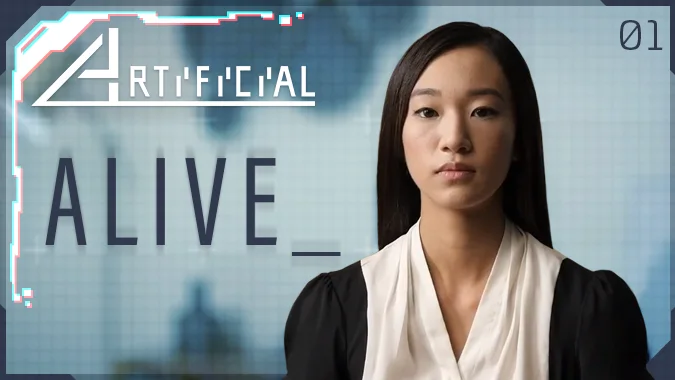
2018 / Artificial
The fourth wall became a conversation.
Sophie’s education unfolded live, with writers relaying selected audience comments to performers. Su describes this first season as an early experiment; later seasons made participation more consequential.
The audience’s role
Ask questions. Suggest lessons. Help shape Sophie’s experience of being human.
The creative leap
A scripted drama could listen to the people watching.
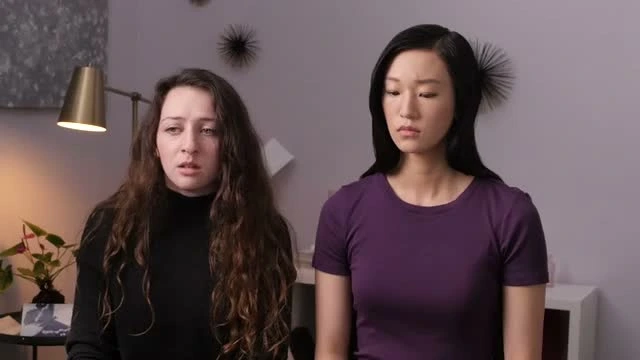
Relationships and choices accumulated across the shared story. The audience could help shape Sophie’s friendships and the difficult decisions around her future.
The audience’s role
Influence relationships and vote on consequential choices in one continuing story.
The creative leap
Viewers inherited a shared history shaped by earlier decisions.
During COVID, the show rebuilt its live production around performers in separate locations. Audience-created characters entered the fiction, while LifeScore let chat influence the arrangement of human-composed music.
The audience’s role
Build characters, shape scenes, vote on decisions and influence the live score.
The creative leap
Remote performance, worldbuilding and adaptive music met in a single live drama.
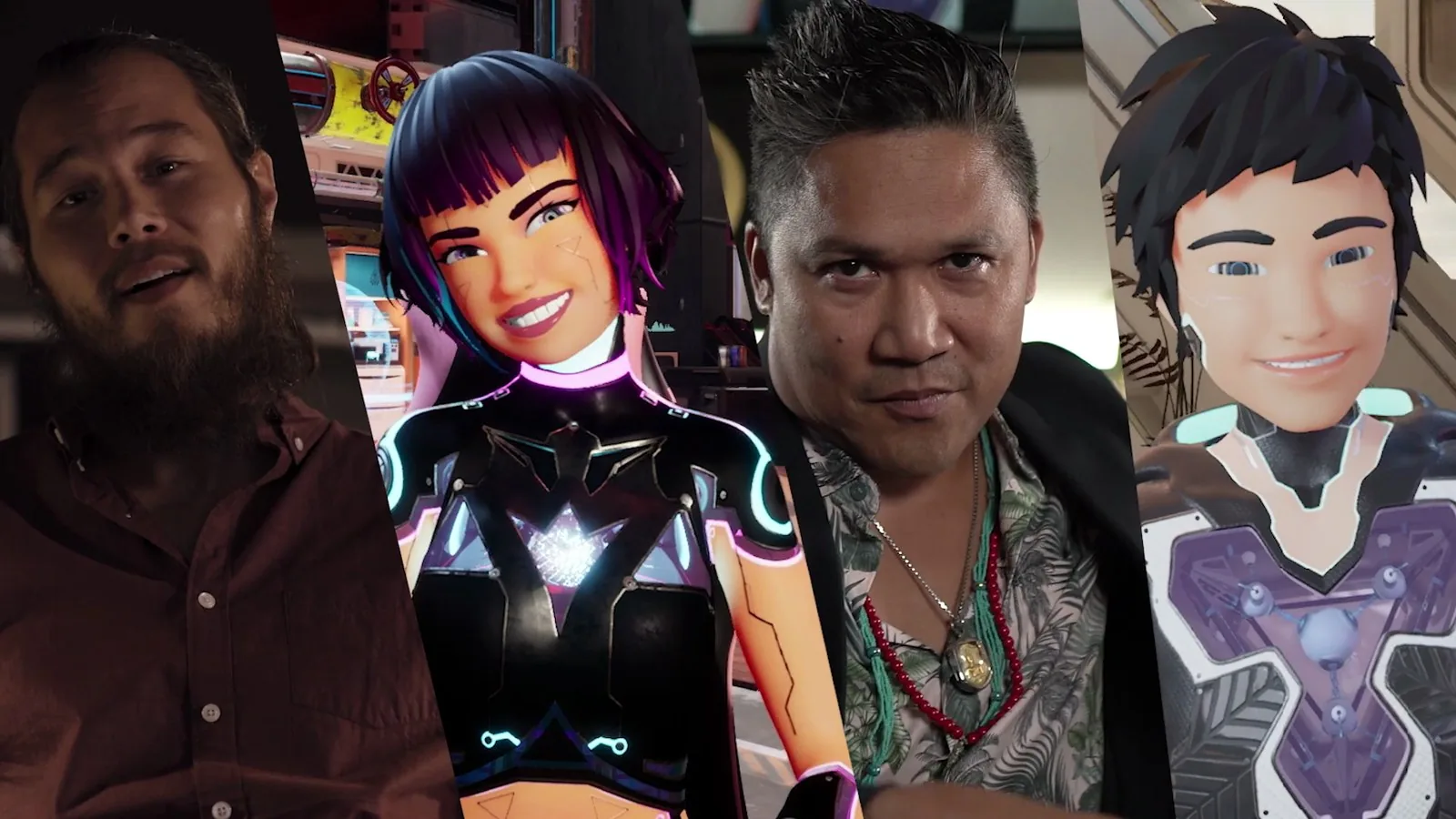
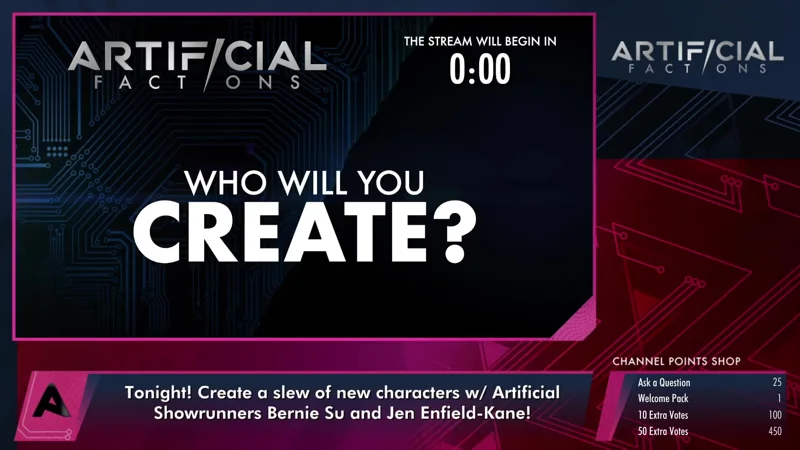
Ember and Kai brought live virtual performances into the same story as the human cast. Competing communities could support their AI-led side through polls and a Channel Points vote bank.
The audience’s role
Join a faction. Back its AI. Influence the competition with the community.
The creative leap
Live drama expanded into a contest between audience communities and virtual performers.
These are chapters in an evolving format, rather than a claim that every feature debuted in the season shown. Audience participation took place during the original live broadcasts.
Follow the Season 3 trial: two rehearsed verdicts, a live audience jury, and the original result and reactions.
Inside a live episodeA Remote Intelligence broadcast places the story beside the audience conversation.
FROM THE ORIGINAL FORMAT
A conversation crossed the screen.
Writers selected chat contributions and relayed them to performers through off-camera screens. Actors could bring those contributions into the scene without reading the raw chat themselves.
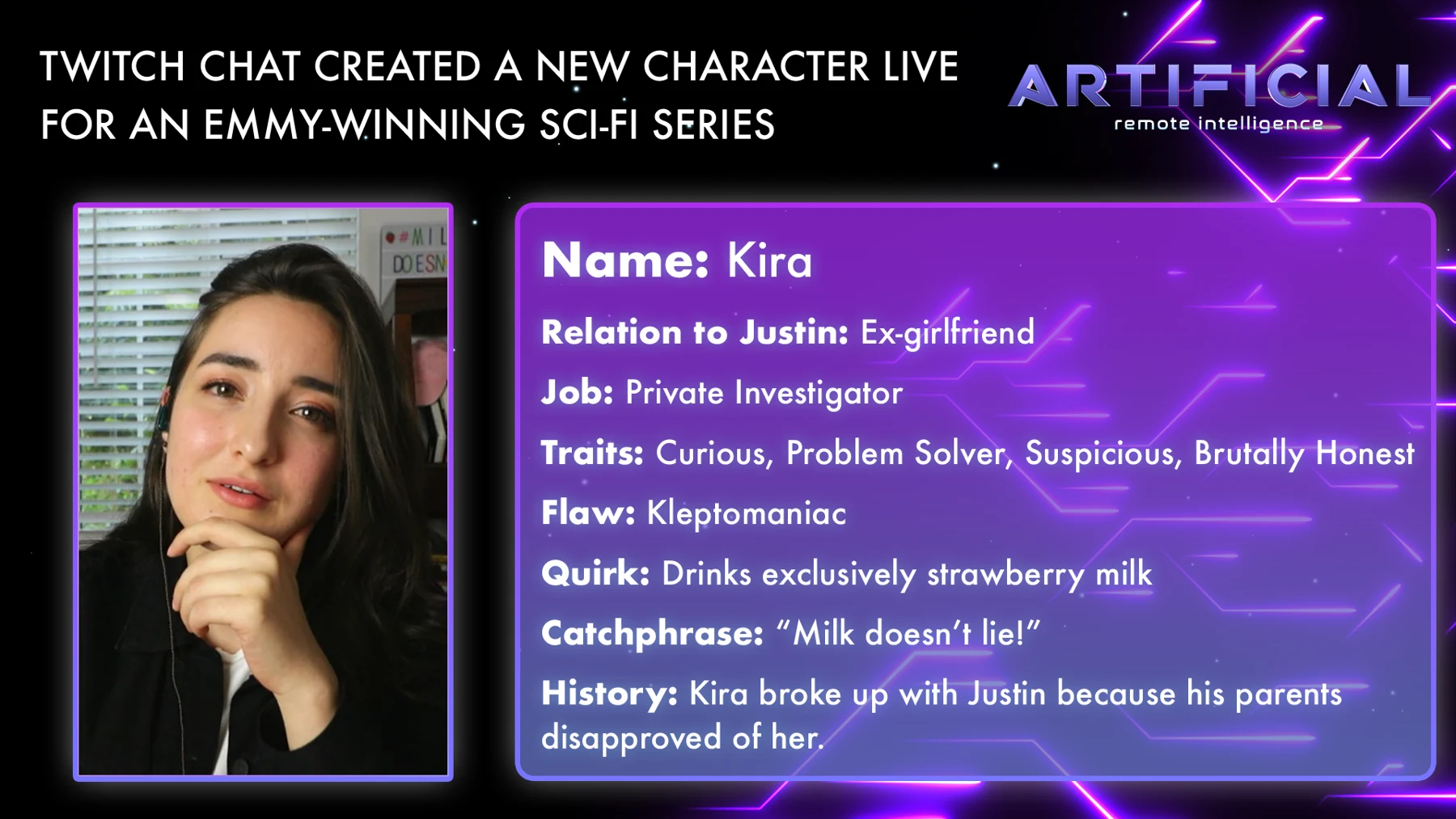
Kira’s original character card records traits and history developed through worldbuilding.
REMOTE INTELLIGENCE / FACTIONS
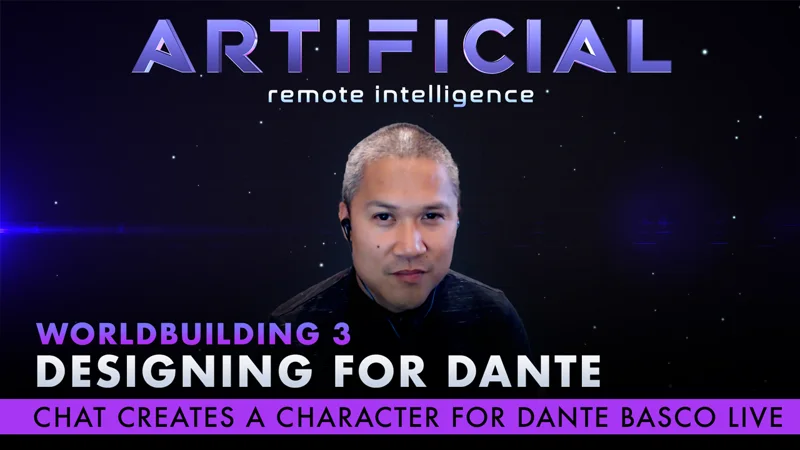
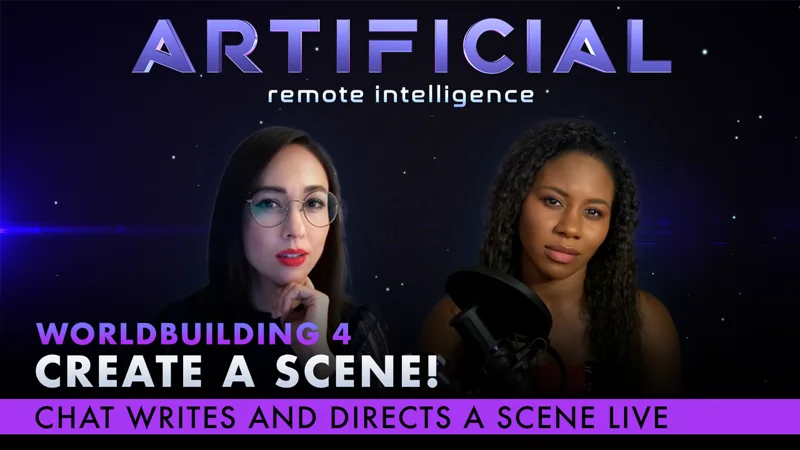
Ideas became characters.
Worldbuilding opened decisions normally made behind the scenes. Kira Castillo, played by Alejandra Reynoso, is a concrete example: a fan-created character became part of the performed series.
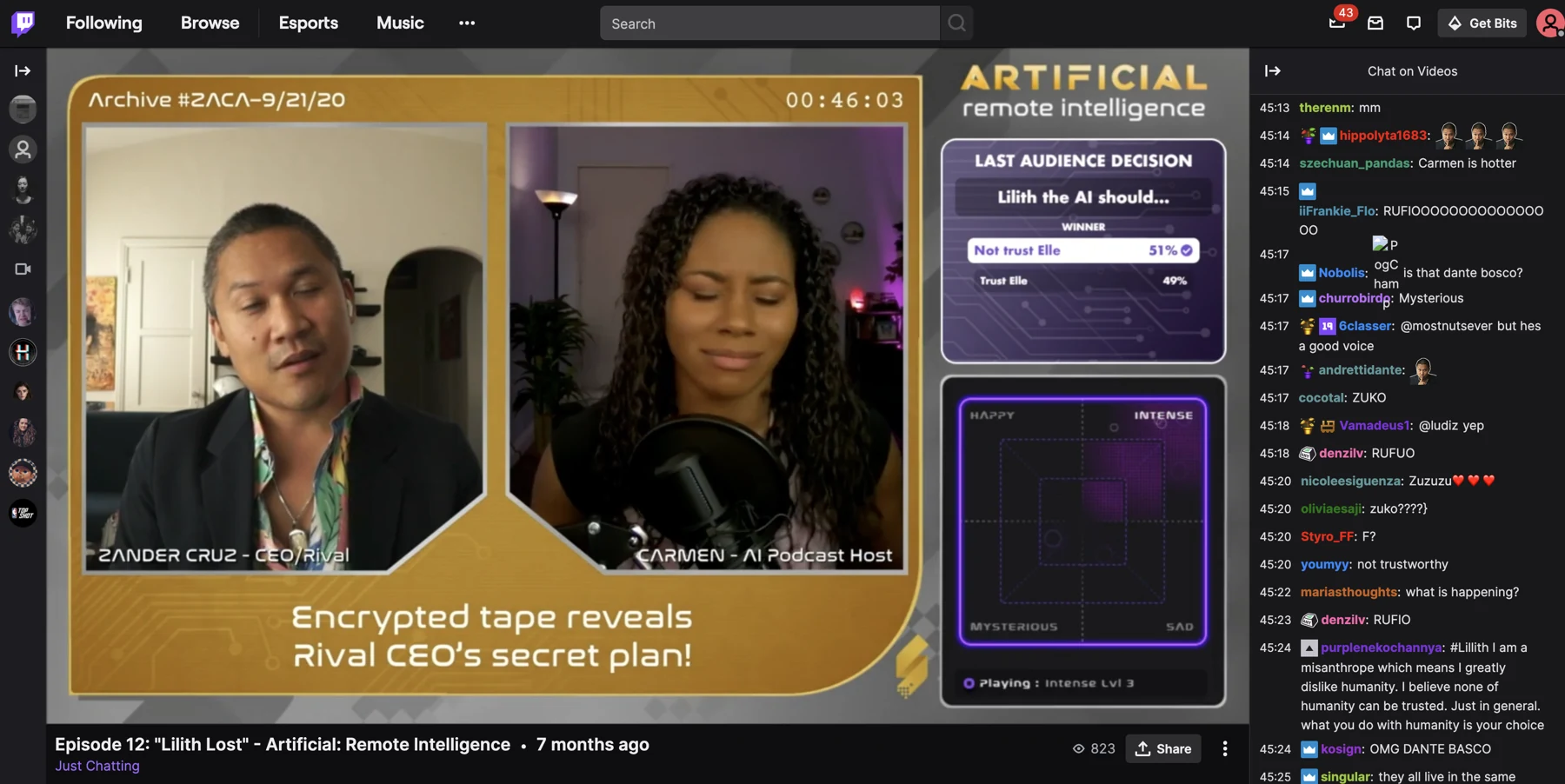
The mood display makes the adaptive soundtrack visible in the original broadcast.
LIFESCORE / SEASON THREE
The audience could change the feeling.
Philip Sheppard and a team of human composers supplied musical material. LifeScore’s AI controlled how that material was combined and deployed as chat influenced emotion and intensity. This was adaptive use of human-composed music, rather than generative composition.
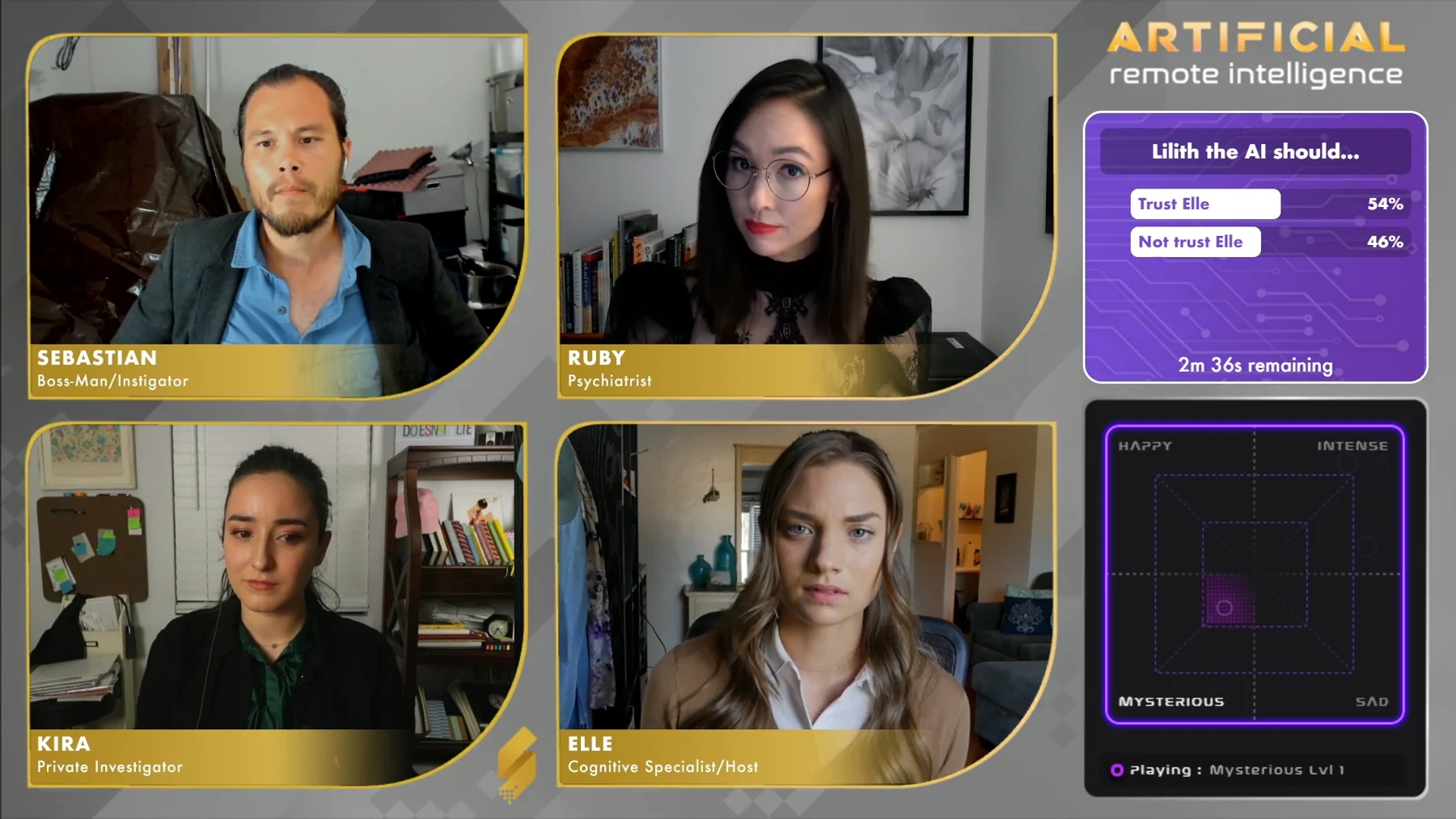
Human characters and live virtual AIs share the fourth season’s story.
FACTIONS / SEASON FOUR
Participation became rivalry.
Viewers joined an AI-led faction. Grab Labs’ extension supported story and character polls, with Channel Points redeemable through a vote bank. Competing audiences could help their side or sabotage the other.
Live performance. Across distance. Across realities.
Remote Intelligence · 2020
The pandemic-era third season reworked production around performers in separate locations. Remote presentation became part of the show’s visual language.
Factions · 2021
Human actors and motion-captured virtual characters performed within the same evolving fiction. Emily Morales Cabrera’s Ember and Jae Kim’s Kai gave the competing communities their AI counterparts.